
Having tough conversations
There are moments when we must sit down and share important news and tough stuff with our kids such a sudden loss, separation, diagnosis or another big change. Here are some ideas & strategies to support having discussions with your children about hard things.
There are moments when we must sit down and share important news and tough stuff with our kids. These are some ideas & strategies to support having discussions with your children about hard things.
Timing: choose a time of day when your routine is relaxed (e.g. not getting ready for a meal or an activity) but not too close to bedtime if possible.
Sensory soothing : Consider offering a sensory activity that keeps everyone’s hands busy while our brain does some important work (Kinetic sand? Playdough? Lego? Fidget toys? Colouring?)
You first: Ensure you’re regulated and grounded for this tough conversation. Remember, regulated does not mean calm. It’s okay to feel sad, scared or uncertain! Regulated means in-control of emotional intensity. Children will look to their caregivers to sort through how they should react and feel about information.
Practice: Use clear concise language to explain what’s going on. Practice some scripts ahead of time so you have some ideas how to say what you mean. Sometimes adults start using adult-like jargon when we are stressed and kids lose the message we are trying to share.
Look in a book: If you’re looking for a script, try finding a children’s book on the topic and borrow the language inside. There are some incredible children’s storybooks on every topic that offer simple and developmentally appropriate language!
Try for a 1:1 ratio: If you have two or more children, try to recruit both caregivers or another family member to ensure that each child has an option for individual support.
Learning style: Consider how your child best processes information. For example, if they are visual learners, you may want to consider having markers and paper nearby so you can draw or write out what you want to share.
Child-led: Every child will process information at a different pace and a different way. Follow their lead and watch for distress or regression during the conversation that lets you know it’s too much or too fast. What are the clues that your child is overwhelmed?
Make it playful: Play signals safety and offers some stress relief. Sometimes children respond to tough conversation with silliness. This does not mean they think it’s a ‘joke’ but is likely their attempt to find relief from difficult feelings. Try to embrace the playful/funny/silly opportunities to support co-regulation.
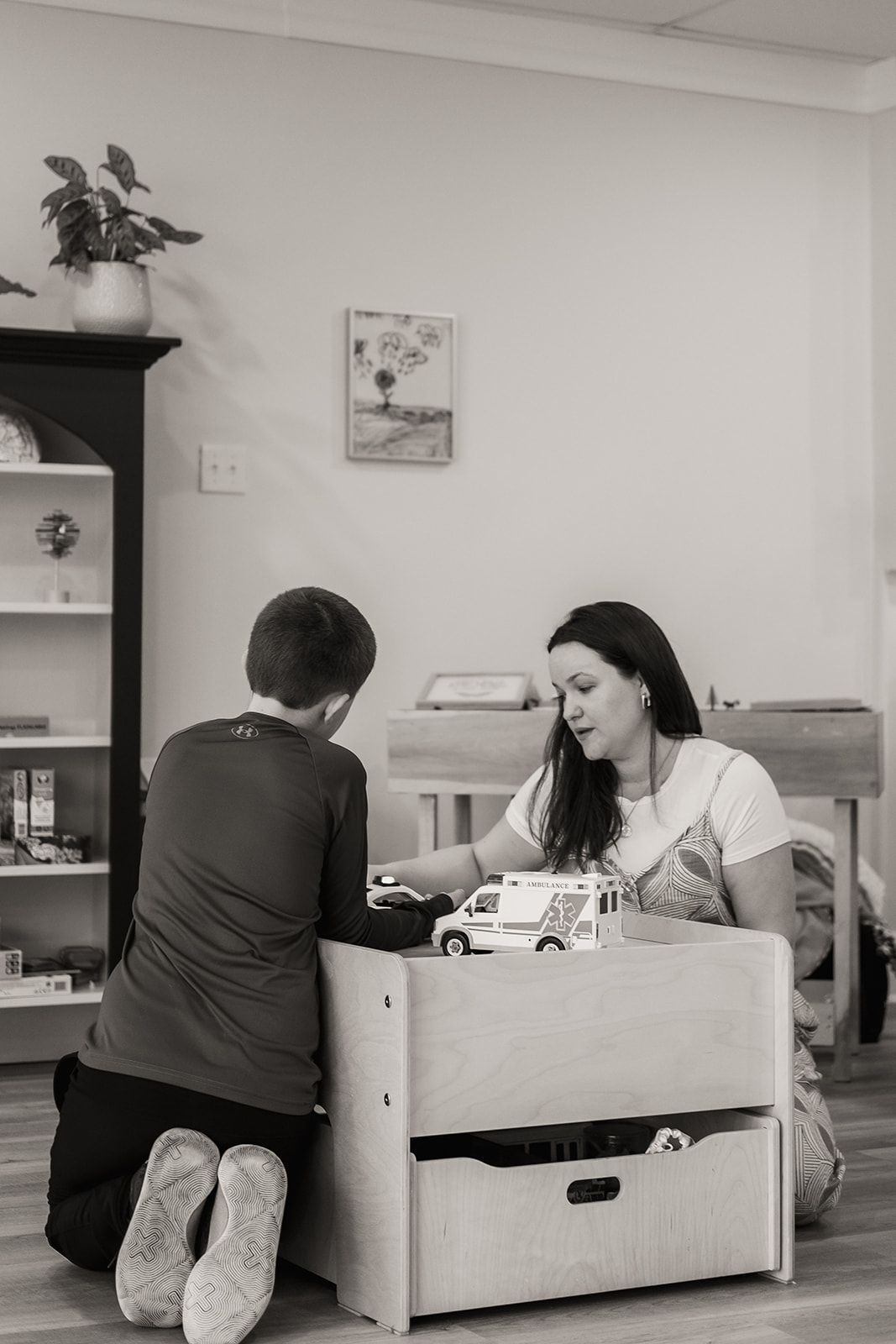
Questions: Normalize that your child may have lots of questions. Map out the people in their world that they can talk to or ask questions (e.g. Mom, Auntie, Grandpa, etc.). Sometimes children may feel more comfortable to ask an extended family member or friend their questions.
When you don’t know: If you don’t have the answers to all their questions, tell them. It’s okay not to know. Follow the feeling instead: “you really want to know what’s going to happen next! Me too. We don’t know that yet and that probably feels really unfair or frustrating.”
Control: Children will seek safety & soothing through control. Make sure to talk about the aspects of the situation where they have some autonomy.
Resiliency: Focus on a resiliency narrative when talking about what’s going to happen next. “This is really hard and we can do tough stuff as a family.” “This is super scary and we don’t know what’s going to happen next. We are going to figure it out together.”
Repeat: anticipate that you will have to repeat information over again. Ask your child to explain how they understand something to ensure they’ve processed the information in a healthy way. Sometimes children will seek out consistency & reassurance by asking the same questions repeatedly.
Everyone on the same page: ensure that all the caring adults in your child’s world shares the same information/response.
Author
Taylor Nelson
Publish Date
September 27th, 2025
Keywords
child development, family transitions, communication, attachment
Neurodevelopmental care for kids, youth & families
We offer creative therapeutic approaches to help navigate the tough stuff in childhood, parenting and adulting. Family Tree Therapy is a place where you can connect, imagine and belong.